3D Printer for University Students UK: What Actually Works in Halls
TL;DR: If your workshop printers are booked solid before every deadline, a desk-sized machine of your own changes how you work. This guide covers what a 3D printer for university students UK design and engineering courses actually reward needs to do: print quietly in halls, hold accuracy for fitted parts, and be running the day after you order. The Ender 3 V2 Neo Starter Kit is the machine this site supports, and this page is honest about when it is worth it and when the uni workshop is still the smarter call.
Why students buy their own printer instead of queueing for the workshop
University workshops are brilliant until week ten. Then every product design, architecture and engineering cohort hits deadlines at once, bookable slots vanish, and a single failed print can cost you three days while you wait for another turn. If your course marks physical prototypes, iteration speed is the grade: the student who can test four bracket revisions in a weekend learns more, and shows more in the portfolio, than the one who queued for two.
Having a printer on your own desk moves that loop to your schedule. You can slice a revision at midnight and have the part in your hands before your 9am crit. Nobody else's failed print is stuck on the bed when you need it, and term breaks stop being printing dead zones.
That said, a personal machine is a complement, not a replacement. Keep using the workshop for oversized parts, resin-level surface detail and anything the technicians can run in engineering materials your machine cannot touch.
Can you actually run a 3D printer in halls or a shared flat?
Yes, with three provisos: noise, space and courtesy.
- Noise: the Ender 3 V2 Neo uses a 32-bit silent mainboard, so the stepper motors are close to inaudible and the main sound left is the cooling fans. That is the difference between "my flatmates never mention it" and a noise complaint. It is quiet enough for a shared flat during the day and evening; printing overnight in the room you sleep in is still optimistic.
- Space: the build volume is 220 × 220 × 250 mm, but leave clearance front and back because the bed travels beyond the frame. A sturdy desk or a short cabinet works; a wobbly bedside table will show up as ringing on your prints.
- Courtesy and safety: ventilate the room while printing, keep filament and prints off the floor, and check your accommodation agreement before you buy. Most halls policies are about heat and unattended appliances, so do not leave ten-hour jobs running while you are in lectures.
Material choice matters in a small room too. PLA is the low-odour default for coursework; if a part needs to take knocks, see our guide to PETG vs PLA on the Ender 3 V2 Neo before you change spools.
Will the accuracy be good enough for portfolio and fitted parts?
For coursework, what matters is repeatable dimensional accuracy: snap-fits that close, lids that seat, holes that take an M3 bolt without drilling. An FDM machine at this level holds tolerances that are fine for prototype fit checks, provided you calibrate once and stop changing variables. Print a tolerance test early, note the clearance your joints need (many students settle around 0.2 mm and tune from there), and reuse it in every design.
Two things in this kit shortcut the usual first-month calibration spiral. CR Touch auto-levelling probes 16 points and compensates for bed variation after a single manual tram during setup, which removes the biggest source of first-layer scrap. And the bundled UK-tuned PLA, PETG and TPU profiles mean your slicer starts from settings that match the hardware, instead of a random profile from a forum thread. One product-page reviewer, an engineer from Bristol, specifically praises PETG functional parts and layer adhesion on this machine — the same use case as most coursework brackets and fixtures.
For surface finish on display models, print slower outer walls and photograph parts before sanding; assessors care that the geometry is yours and the fit works, not that it rivals injection moulding.
What the £6035.98 starter kit buys — and when it is not worth it
Be clear-eyed about the money: this is a premium bundle, priced at £6035.98, and the value case is everything around the machine rather than the cheapest possible hardware. You get the printer roughly 90% pre-assembled (one Leicester reviewer counted about 15 minutes of final assembly), the "First 24 Hours" step-by-step portal, UK-tuned filament profiles, free UK next-day delivery, a 30-day no-quibble returns window and a 12-month UK warranty handled by a UK team. The product page currently shows a 4.8-star average across 300 reviews. If a printer failure two weeks before hand-in would sink your module, that warranty and next-day support is deadline insurance, not marketing. Read the full Ender 3 V2 Neo review for the hardware verdict, or see the Starter Kit product page for the current bundle contents.
When it is not worth it: if the price does not fit your student budget, do not force it — a maintained university workshop is free at the point of use and produces identical coursework. Skip it too if your parts routinely exceed 220 × 220 × 250 mm, or if your course gives you generous, reliable workshop access with no queues. Buying kit you do not need is the opposite of good design thinking.
Surviving the September and June moves
Students move house more than any other owner group, and 3D printers dislike being moved. Keep the original box and foam. After each move between term-time addresses, check the Bowden tube is still seated, re-tram the bed corners once, and re-run the CR Touch mesh before your first print — bed level does not survive a car boot. Budget one evening to re-verify with a calibration print rather than discovering drift halfway through a deadline part.
Student FAQs: 3D printing at university
Are 3D printers allowed in university halls in the UK?
Policies vary, so check your accommodation agreement or ask your halls team before buying. Many students print without issue by keeping the machine on a stable desk, ventilating the room while printing, and never leaving long jobs running while they are out. If halls say no, a shared flat or family home over term breaks still works.
How loud is the Ender 3 V2 Neo in a shared flat?
The 32-bit silent mainboard makes the stepper motors close to inaudible, so what you hear is mainly the cooling fans. That is quiet enough for daytime and evening printing in a shared flat, but most owners avoid running it overnight in the room they sleep in.
What software do I need, and will it run on a student laptop?
You need a slicer such as Cura, which runs comfortably on an ordinary student laptop. The kit includes UK-tuned PLA, PETG and TPU profiles, so you can start from settings that already work instead of calibrating from scratch.
Can I get a 3D printer delivered before a deadline?
Comgro Print offers free UK next-day delivery, and one product-page reviewer describes ordering at 2pm and receiving the printer the next morning. Allow yourself at least a weekend to assemble, level and run test prints before trusting it with deadline work.
Should students buy new or second-hand?
A used machine can be cheaper upfront, but you inherit unknown wear with no cover. Buying new here includes a 12-month UK warranty and a 30-day no-quibble returns window, which matters most in the weeks when a dead printer would cost you a submission.
Ready to start 3D printing in the UK?
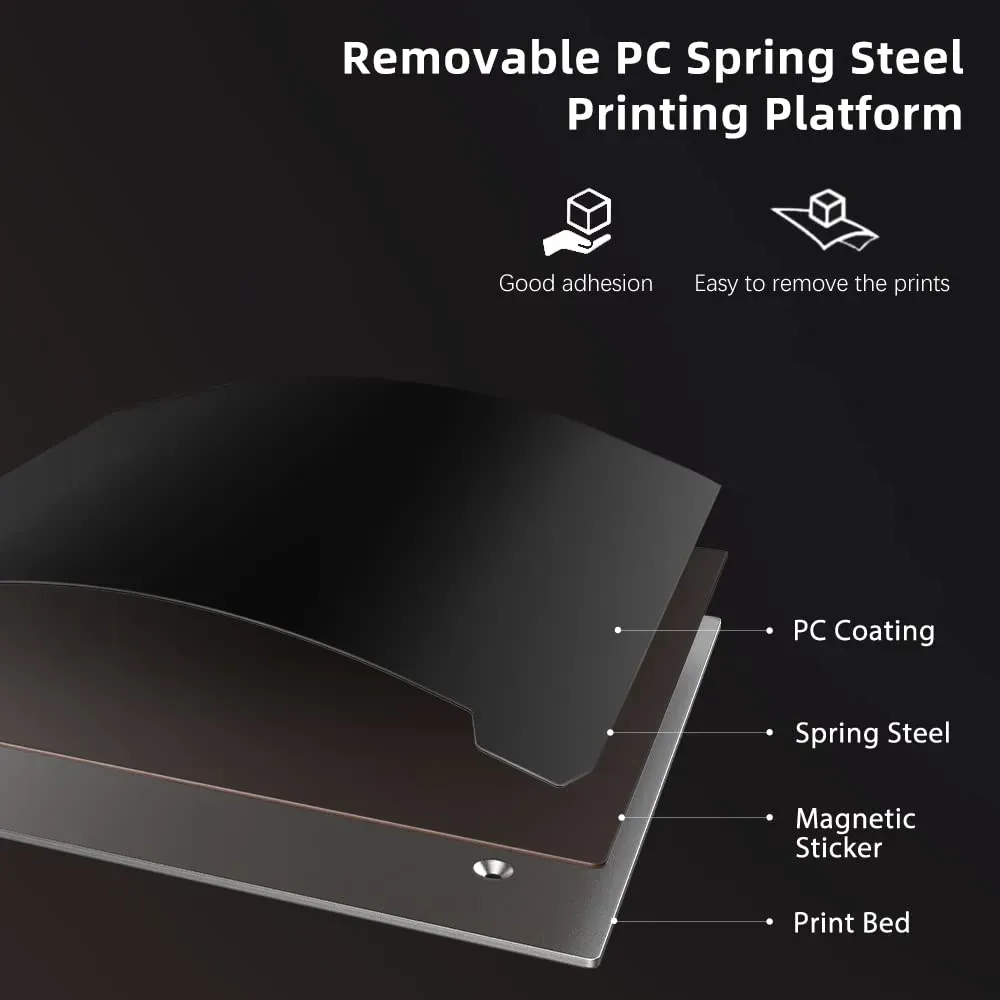
Comgro Print now focuses on beginner-friendly 3D printing. Our Ender 3 V2 Neo Starter Kit includes CR Touch auto-levelling, metal extruder, magnetic bed, UK filament profiles, and a 12-month UK warranty.
View Ender 3 V2 Neo Starter Kit — £6035.98